





Artificial intelligence is reshaping the software development landscape. It is not just a buzzword anymore. AI is now a crucial part of the software development lifecycle (SDLC), with AI in SDLC initiatives moving from pilots to production across AI software development.
Developers and project managers are leveraging AI to enhance efficiency. From AI for developers to AI project management, AI tools automate repetitive tasks, freeing up valuable time. This allows teams to focus on innovation and creativity.
AI is making coding faster and more accurate. AI coding tools suggest improvements and help maintain code quality. This reduces errors and enhances productivity.
Testing is another area where AI shines. AI in testing automates test case generation and execution. This leads to faster and more reliable testing processes.
AI also plays a significant role in project management. It provides data-driven insights for better decision-making. AI optimizes resource allocation, ensuring projects stay on track.
The integration of AI in SDLC is not without challenges. Ethical considerations and data privacy are crucial. However, the benefits of AI in software development are undeniable.
Understanding the Software Development Lifecycle (SDLC)
The software development lifecycle is a structured process used to create software. It ensures software is delivered efficiently and effectively. Each phase of the lifecycle plays a unique role in achieving these goals.
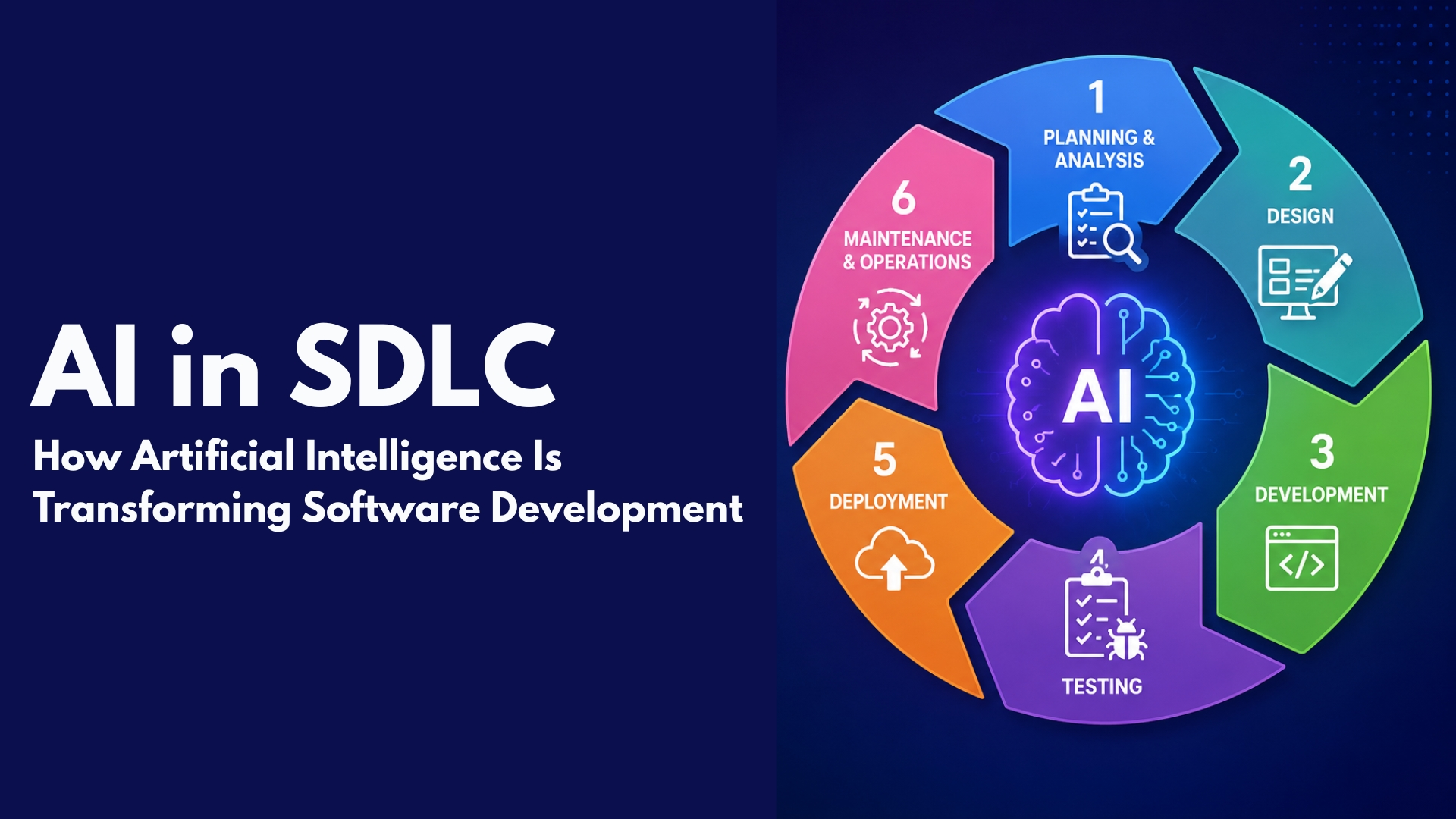
SDLC typically includes several key phases. These phases are planning, design, coding, testing, deployment, maintenance, and support. Each phase depends on the others to ensure smooth development.
- Planning: Define goals and requirements.
- Design: Establish architecture and design specifications.
- Coding: Write and compile code.
- Testing: Identify and fix bugs.
- Deployment: Deliver the final product to users.
- Maintenance: Provide updates and bug fixes.
Understanding each phase helps teams manage the development process effectively. It also ensures that all stakeholders are aligned. This alignment reduces misunderstandings and enhances project success.
The integration of AI in each of these SDLC phases offers significant advantages. By enhancing these areas, AI promises to revolutionize software development as we know it. When considering the AI in SDLC process, these phases remain the same but are increasingly augmented by intelligent automation.
The Rise of AI in SDLC: An Overview
Artificial Intelligence is rapidly becoming a crucial part of the software development lifecycle. In industry conversations commonly written as ai in sdlc its impact is felt across every phase. AI streamlines processes, ensuring efficiency and precision.
Developers now rely heavily on AI tools to automate repetitive tasks. This automation not only saves time but also reduces errors. As a result, teams can focus more on creativity and innovation.
The integration of AI in SDLC has benefits across various areas. Here are some critical aspects:
- Automation: Speeds up routine tasks, improving productivity.
- Predictive analytics: Identifies potential issues early.
- Enhanced decision-making: Provides data-driven insights.
- Quality assurance: Ensures robust testing and bug detection.
This shift towards AI is not just about replacing manual efforts. It is about enhancing them with intelligent insights. AI empowers developers to make informed decisions quickly. These capabilities position AI as a transformative force in software development. The future of AI promises even more breakthroughs for the SDLC.
AI in Requirements Gathering and Planning
Gathering requirements is a crucial start to any project. AI transforms this phase by introducing more precision. It analyzes large data sets and user feedback efficiently.
AI-powered tools help identify specific project needs. They can interpret natural language inputs, making user requirements clearer. This results in a more refined understanding of project goals.
Planning a software project involves many variables. AI assists by predicting potential challenges. It provides data-driven insights that guide strategic decision-making. This helps in crafting realistic timelines and budgets.
AI’s capabilities in this phase include:
- Natural language processing: Translates technical needs.
- Data analysis: Finds patterns in user requirements.
- Predictive modeling: Anticipates project risks.
- Resource optimization: Allocates resources effectively.
By leveraging AI during requirements gathering and planning, teams can start projects on a solid foundation. This approach reduces surprises down the line, paving the way for smoother development processes.
AI-Enhanced Design and Architecture
Artificial intelligence is reshaping the way we design software systems. It aids architects in developing more efficient and scalable solutions. AI tools offer sophisticated modeling techniques, enhancing system architecture.
AI facilitates the creation of user-centric designs. It analyzes user data to predict preferences, guiding UX/UI improvements. This results in more intuitive interfaces that meet user expectations.
Predictive analytics play a crucial role in design processes. AI forecasts how changes might impact system performance. This foresight aids designers in making informed decisions that minimize risk.
The benefits of AI in design and architecture include:
- Predictive analytics: Reduces design risks.
- User data analysis: Enhances user experience.
- Pattern recognition: Improves design efficiency.
- Automated modeling: Speeds up architectural planning.
AI is not just automating design tasks but enhancing creativity. It provides architects with innovative tools and insights. This helps in crafting systems that are not only functional but also forward-thinking.
AI for Developers: Coding and Code Generation
AI tools are revolutionizing the way developers write code. They offer support in generating code snippets efficiently and accurately. This helps developers focus more on complex problem-solving.
These AI coding tools learn from vast code repositories, supporting AI for developers workflows. They provide suggestions based on best practices. This enhances both productivity and code quality.
AI assists in identifying code anomalies early. Machine learning algorithms spot potential bugs before they escalate. This proactive approach minimizes costly errors in later stages.
Key advantages of AI for developers include:
- Automated code generation: Speeds up development.
- Bug prediction: Prevents issues early.
- Code quality improvement: Ensures adherence to standards.
- Code refactoring suggestions: Simplifies complex code.
Furthermore, AI enhances code review processes. It flags inconsistencies and prompts developers to refine their work. This leads to robust and maintainable software solutions that meet industry standards.
AI coding tools are not just about automation. They empower developers to innovate and create high-quality software. By reducing mundane coding tasks, AI fosters innovation and creativity.
AI in Testing: Automation and Quality Assurance
Artificial intelligence is transforming software testing. It automates many repetitive tasks, making processes faster and more accurate. AI tools handle test case generation and execution efficiently.
Machine learning algorithms predict errors that could occur in later stages. By identifying these issues early, teams can fix them promptly. This leads to higher quality software with fewer post-deployment problems.
The integration of AI in testing improves test coverage. Intelligent systems can adapt to changes in code, ensuring that all aspects of an application are assessed. This level of automation enhances both speed and reliability.
Key benefits of AI in testing include:
- Automated test case creation: Reduces manual effort.
- Dynamic test adaptation: Adjusts tests based on code changes.
- Early error prediction: Flags potential defects sooner.
- Enhanced test coverage: Ensures comprehensive testing.
Moreover, AI can analyze test results and provide actionable insights. This allows testers and developers to focus on critical areas. AI-driven analytics guide efforts and optimize testing strategies efficiently.
As AI continues to evolve, its role in software testing is expanding. It not only enhances quality assurance but also ensures continuous improvement in the development lifecycle.
AI in Deployment and Continuous Integration/Continuous Deployment (CI/CD)
The deployment phase is crucial in software development. AI optimizes deployment by automating routine tasks. This reduces human error and speeds up the process.
Continuous integration and continuous deployment (CI/CD) benefit from AI. It helps ensure smooth transitions between code changes. This leads to faster and more frequent releases.
AI can analyze deployment logs for anomalies. Identifying issues early prevents failures in the production environment. Proactive measures enhance software reliability.
Key applications of AI in CI/CD include:
- Automating build processes: Streamlines code integration.
- Monitoring deployment metrics: Provides insights into performance.
- Detecting deployment errors: Reduces downtime.
With AI, teams can better allocate resources during deployment. AI-enabled systems predict potential bottlenecks and optimize workflows. This results in timely and well-executed releases.
Incorporating AI into CI/CD fosters a more responsive development lifecycle. It empowers teams to innovate rapidly and maintain high-quality standards. As AI technologies evolve, their impact on deployment will likely deepen.
AI in Maintenance and Support
Maintenance and support are vital yet often challenging phases in software development. AI plays a crucial role in simplifying these tasks. It enhances efficiency and reduces response time.
AI-powered predictive analytics forecast potential system failures. This allows teams to address issues before they impact users. Proactive maintenance ensures a seamless user experience.
Natural language processing (NLP) helps AI chatbots assist users effectively. They provide instant support and troubleshooting solutions. This reduces the workload on human support staff.
Key benefits of AI in maintenance and support include:
- Automating routine maintenance tasks: Frees up developer resources.
- Enhancing user support through AI-driven chatbots: Delivers prompt assistance.
- Analyzing performance data for improvements: Facilitates continuous system enhancements.
AI also aids in codebase management by identifying redundancies. It suggests improvements to ensure consistency and performance. Ultimately, AI in maintenance and support leads to more robust and resilient software systems. This ensures satisfaction for both users and developers.
AI Project Management and Team Collaboration
AI project management is transforming the field into a data-driven science. It optimizes processes, enhances collaboration, and ensures project success. AI tools analyze vast amounts of data to deliver actionable insights.
These insights assist in resource allocation, keeping projects on track. Team members gain clarity on priorities and timelines. AI algorithms predict potential roadblocks and suggest preventive strategies.
Effective communication is crucial for team success. AI enhances this by simplifying complex technical jargon. Tools powered by AI translate intricate information into understandable language.
Key advantages of AI in project management and collaboration include:
- Resource optimization: Ensures efficient allocation and utilization.
- Predictive analytics for risk management: Anticipates and mitigates challenges.
- Improved communication tools: Bridges the gap between tech and non-tech stakeholders.
AI facilitates seamless teamwork through collaboration platforms. These platforms are AI-enhanced, integrating data for transparent decision-making. The result is improved productivity, reduced friction, and higher project success rates. AI is redefining how teams collaborate to achieve business goals.
Security, Ethics, and Responsible AI in SDLC
AI integration in the SDLC raises critical security concerns. AI’s vast capabilities can inadvertently expose vulnerabilities. It’s essential to address these risks proactively.
Security practices must evolve to incorporate AI’s nuances. Leveraging AI helps identify threats before they materialize. Predictive analytics can flag unusual patterns, preventing potential breaches.
Ethical AI implementation is equally crucial. Misuse of AI can lead to privacy issues and data misuse. Developers must embed ethical guidelines within AI processes to safeguard user interests.
Responsible AI development ensures transparency and fairness. This involves rigorous testing and validation of AI systems. Teams should commit to ethical standards to maintain trust.
Key considerations for security, ethics, and responsibility include:
- Data privacy protection: Guarding user data against misuse.
- Transparent AI algorithms: Ensuring fair and unbiased outputs.
- Continuous monitoring: To swiftly detect and respond to threats.
Balancing innovation with responsibility fosters sustainable AI in software development. Ethical considerations ensure that AI advancements align with human values. Sustainable practices uphold the integrity of AI solutions.
Challenges and Limitations of AI in SDLC
AI in the SDLC presents several challenges. Despite its advantages, AI can sometimes be costly to implement. Many businesses face significant expenses to integrate AI tools effectively.
Another limitation is the requirement for specialized skills. Developers need to understand AI algorithms and data science concepts. Upskilling the workforce can be time-consuming and resource-intensive.
AI’s decision-making process can be opaque. This lack of transparency might lead to stakeholder hesitation and mistrust. Trustworthy AI systems require clearly defined logic and accountability.
Key challenges include:
- High implementation costs: Investment in AI tools and infrastructure.
- Skill shortages: Need for AI and data science expertise.
- Transparency issues: Understanding AI decision-making processes.
Addressing these challenges is essential for maximizing AI’s potential in software development. Proper training and transparent practices can mitigate the drawbacks.
The Future of AI in Software Development
The future of AI in software development holds immense promise. Advances in AI technology will push the boundaries of what developers can achieve. Enhanced AI models will deliver smarter, faster solutions.
AI will soon generate complex code structures, reducing manual coding. This automation will empower developers to focus on innovation and creativity. The development process will become more efficient and innovative.
Exciting trends include:
- Advanced AI models: Capable of understanding complex coding patterns.
- Seamless integration: AI tools becoming a standard in development environments.
- Increased personalization: Tailoring software experiences based on user behaviors.
The ongoing evolution of AI will revolutionize AI software development practices. Developers and businesses need to adapt to these changes. Embracing AI ensures success in an increasingly digital world.
Conclusion: Embracing AI for a Smarter SDLC
AI’s role in transforming software development is undeniable. Integrating AI into the SDLC streamlines processes and enhances outcomes. Developers benefit from increased efficiency and innovation.
Embracing AI ensures competitive advantage in a rapidly evolving market. As AI tools become more advanced, they will redefine every SDLC phase. This transformation is both a challenge and an opportunity.
Successful adaptation requires openness to new technologies and continuous learning. By leveraging AI, software teams can build smarter and more reliable applications. Ultimately, AI will drive the future, creating more intelligent and adaptable software solutions.
FAQs
How does AI change the SDLC without changing its phases?
AI augments every SDLC phase with automation, prediction, and data-driven insights, improving speed and quality while letting humans focus on creativity. In planning, AI uses NLP, data analysis, predictive modeling, and resource optimization. In design, it applies predictive analytics, user data analysis, pattern recognition, and automated modeling. During coding, it accelerates development with code generation, bug prediction, quality enforcement, and refactoring suggestions. In testing, it automates test creation and execution, adapts to code changes, predicts errors early, and boosts coverage. For deployment/CI/CD, it automates builds, monitors metrics, and detects anomalies. In maintenance/support, it enables predictive maintenance, AI-driven user support, and performance analysis. In project management, it optimizes resources, predicts risks, and improves communication. The goal is enhancement not replacement of human work.
What role does AI play in requirements gathering and planning?
AI clarifies and de-risks early-stage decisions by turning raw inputs into actionable requirements and realistic plans. It interprets natural language to make user needs clearer, analyzes large datasets and feedback to find patterns, models risks to anticipate challenges, and optimizes resource allocation to shape achievable timelines and budgets.
How do AI tools assist developers during coding and code review?
They boost productivity and code quality by learning from vast code bases to suggest best-practice implementations. Developers gain automated code generation, early bug prediction, quality and standards checks, and refactoring suggestions. AI also strengthens code reviews by flagging inconsistencies and prompting improvements, reducing errors before later stages.
How does AI improve testing and deployment (CI/CD)?
In testing, AI automates test case generation and execution, adapts tests to code changes, predicts defects earlier, and expands coverage, while analyzing results to guide focus. In CI/CD, AI streamlines builds, monitors deployment metrics, analyzes logs for anomalies, detects deployment errors, and predicts bottlenecks enabling faster, more reliable releases with reduced downtime.
What challenges and ethical concerns come with AI in the SDLC?
Key hurdles include high implementation costs, skill shortages, and opaque decision-making. Security and privacy risks require proactive controls, transparent algorithms, and continuous monitoring. Responsible AI practices ethical guidelines, fairness, rigorous testing and validation, and team training help build trust and mitigate these drawbacks.