
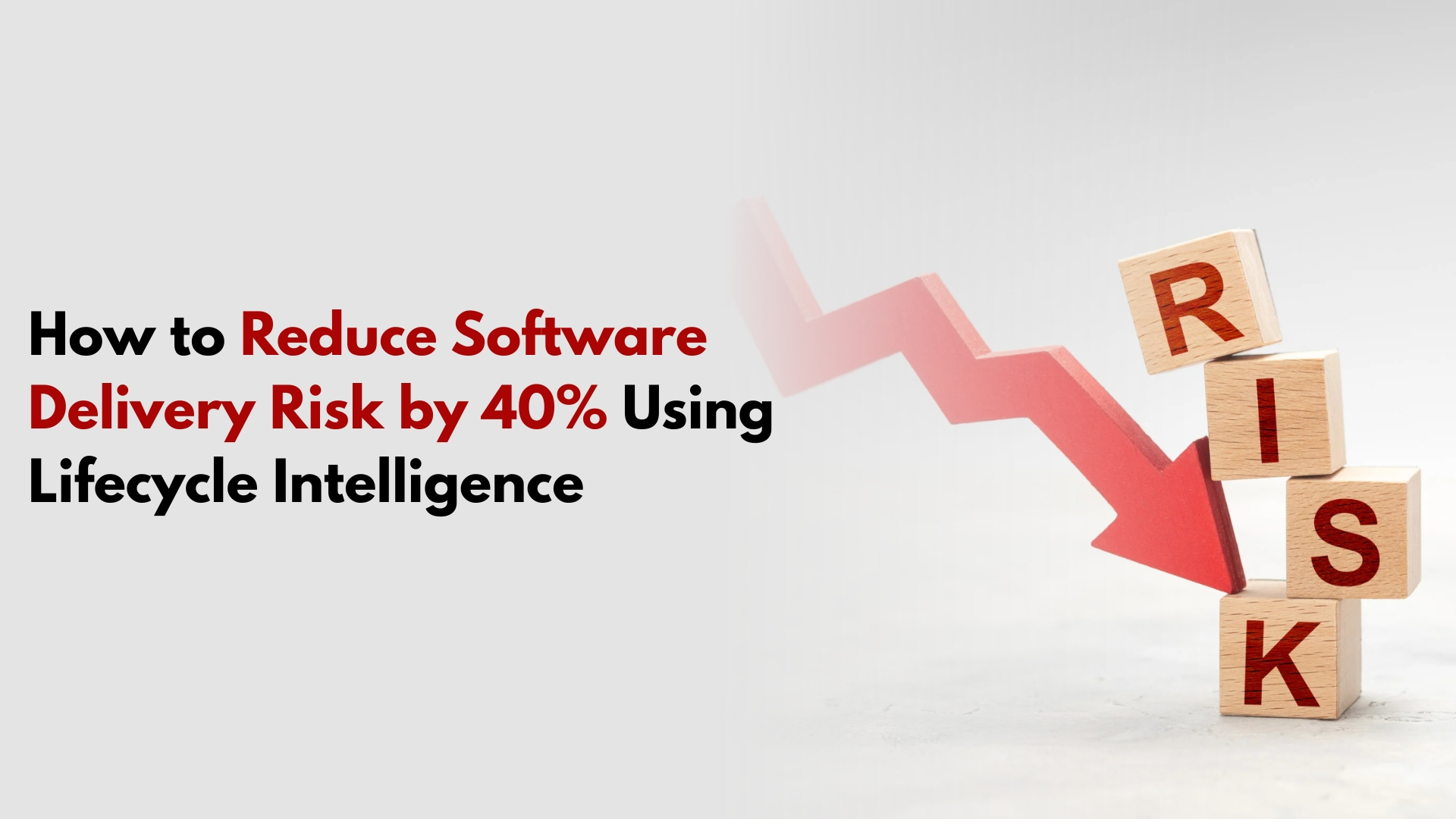





Software delivery risk increases when requirements, architecture, development, QA, release, and compliance operate as separate steps. Lifecycle Intelligence reduces that risk by keeping every phase connected through shared context, real-time traceability, and embedded governance. The result is fewer handoff failures, less rework, faster feedback, and more predictable software delivery.
Traditional software delivery often breaks down at the points where work moves from one team to another. Requirements get interpreted differently in design. Architecture decisions lose connection to business intent. Development and QA discover issues late. Release and compliance teams must reconstruct what happened after the fact. These gaps create delays, rework, cost overruns, and delivery uncertainty.
ChampSoft’s CHILL OS addresses this problem with an AI-native operating model built for Lifecycle Intelligence. Instead of treating software delivery as a chain of disconnected handoffs, CHILL OS creates one continuously synchronized lifecycle across requirements, architecture, engineering, testing, release, and compliance. This shift helps organizations reduce software delivery risk while improving delivery speed, governance, and code quality.
What Is Lifecycle Intelligence in Software Delivery?
Lifecycle Intelligence is a software delivery approach that keeps requirements, architecture, engineering, QA, release, and compliance continuously connected through shared intelligence, real-time traceability, and embedded governance. Instead of relying on sequential handoffs, it creates a synchronized lifecycle where every phase remains aligned to the original intent.
In many organizations, delivery risk builds quietly across fragmented systems. Teams may use separate tools, separate documents, and separate approval processes. That makes it harder to preserve context as work moves from planning to implementation and release.
Lifecycle Intelligence solves this by turning delivery into a connected system rather than a sequence of isolated phases. Specifications remain linked to architecture. Architecture remains linked to engineering. Engineering remains linked to validation, release, and governance. This continuous alignment improves predictability and reduces late-stage surprises.
Why Does Software Delivery Risk Increase in Traditional Delivery Models?
Software delivery risk increases in traditional delivery models because each handoff between teams introduces friction, context loss, delayed feedback, and misalignment. Risks often surface late, when fixes are more expensive, timelines are tighter, and delivery decisions are harder to reverse.
Most delivery models rely on sequential handoffs between requirements, design, engineering, QA, and delivery. While this structure may seem organized, it often creates blind spots.
Common sources of software delivery risk include:
- Fragmented requirements and inconsistent interpretation
- Design decisions that drift from business intent
- Delayed validation and late defect discovery
- Weak traceability across the software lifecycle
- Manual governance and compliance checks
- Rework caused by missing context between teams
- Poor release coordination across delivery stages
The longer these issues remain hidden, the greater the impact on cost, quality, and time-to-value. That is why reducing software delivery risk requires more than better project tracking. It requires a better operating model.
How Does CHILL OS Reduce Software Delivery Risk by 40%?
CHILL OS reduces software delivery risk by replacing disconnected handoffs with a unified, intelligent lifecycle. By synchronizing requirements, architecture, development, testing, release, and compliance in real time, it helps teams catch misalignment earlier, reduce rework, strengthen governance, and deliver with greater predictability.
The “40%” reduction comes from addressing the main drivers of delivery failure: friction between phases, late-stage risk discovery, duplicated effort, and inconsistent execution. CHILL OS is designed to reduce those losses structurally, not just operationally.
It does this by introducing a delivery model where:
- Specifications become a governed, living source of truth
- Architectural mapping preserves business and technical alignment
- Development and testing operate from approved shared context
- AI agents support execution without removing human accountability
- Compliance, governance, and traceability are embedded throughout delivery
Rather than fixing issues after handoffs fail, CHILL OS reduces the number of risky handoffs in the first place.
What Is CHILL OS?
CHILL OS, or ChampSoft Intelligent Lifecycle OS, is an AI-native operating system for modern software delivery. It connects requirements, architecture, development, testing, release, and compliance into one synchronized lifecycle while embedding governance, traceability, and human accountability throughout execution.
Over the past several years, ChampSoft has evolved its delivery approach beyond isolated tools and phase-based processes. CHILL OS reflects that shift.
Instead of treating requirements, design, engineering, QA, and delivery as disconnected steps, CHILL OS brings them together as one continuously connected system. Shared intelligence and real-time traceability help preserve original intent from planning through release. This reduces context loss and strengthens decision-making across the lifecycle.
What Distinguishes CHILL OS From Conventional Software Delivery Models?
CHILL OS differs from traditional software delivery models because it replaces sequential, fragmented handoffs with a unified, continuously synchronized lifecycle. Traditional models separate phases and teams; CHILL OS keeps every phase connected through shared context, embedded governance, and real-time traceability.
Here is the practical difference:
Traditional Software Delivery
- Requirements, design, engineering, QA, and release operate in sequence
- Each transition introduces friction and context loss
- Risks often appear late in the lifecycle
- Compliance and governance are often reactive
- Rework increases delivery cost and timeline pressure
CHILL OS and Lifecycle Intelligence
- Requirements, design, engineering, QA, and release stay synchronized
- Shared intelligence preserves context across teams
- Real-time traceability exposes risk earlier
- Governance and compliance are embedded from the start
- Fewer handoffs reduce rework and improve throughput
This makes CHILL OS especially relevant for organizations seeking lower delivery risk, faster iteration, and stronger delivery predictability.
How Does CHILL OS Work Across the Software Delivery Lifecycle?
CHILL OS works by operationalizing Lifecycle Intelligence across the full software delivery lifecycle. It combines framework, platform, AI agents, and governance into one system so that planning, design, engineering, testing, release, and compliance remain connected from start to finish.
ChampSoft describes CHILL OS as both:
Framework
A new operating model for AI-native systems, where intelligence, governance, and execution are inseparable.
Platform
The system that operationalizes this model across organizations, teams, and lifecycles.
This matters because many delivery models define process without truly connecting execution. CHILL OS combines the operating model and the system of execution so organizations can maintain alignment continuously, not only during reviews or release checkpoints.
What Are the Core Stages of Lifecycle Intelligence in CHILL OS?
CHILL OS introduces Lifecycle Intelligence in structured stages: Specification Intelligence, Architectural Mapping, and Integrated Execution. These stages establish alignment early, preserve traceability throughout delivery, and reduce software delivery risk by keeping teams connected to the same source of truth.
1. What Is Specification Intelligence?
Specification Intelligence transforms fragmented requirements into structured, governed specifications that remain continuously connected across the lifecycle. These specifications act as a living source of truth for implementation, validation, and release while preserving original intent.
This stage reduces risk because unclear or disconnected requirements are one of the most common causes of delivery failure. When specifications remain connected to downstream work, teams can validate decisions against business goals more effectively.
2. What Is Architectural Mapping?
Architectural Mapping translates governed specifications into architectural models aligned with standards and constraints. Intelligence helps surface risk, validate assumptions, and maintain alignment between business intent and technical design.
This stage improves delivery by reducing architectural drift. Instead of allowing implementation to diverge from approved design, teams can keep architecture grounded in the original requirements and governance standards.
3. What Is Integrated Execution?
Integrated Execution ensures that development and testing operate from the same approved specifications and architectural context. AI-assisted code generation, validation, and release coordination stay synchronized with design intent while maintaining traceability and governance throughout delivery.
This stage reduces late-stage risk because engineering, QA, and release no longer operate on disconnected interpretations of what should be built. The shared context improves consistency, quality, and release readiness.
How Do AI Agents Support Lifecycle Intelligence Without Replacing Human Judgment?
AI agents in CHILL OS augment every role by embedding intelligence, governance, security, and compliance across the lifecycle while preserving human ownership and accountability. They support decision-making, validation, and coordination, but they do not remove the need for human judgment.
CHILL OS uses an AI agent ecosystem across:
- Pre-Sales, Design and Planning
- Development and Engineering
- Quality, Security and Compliance
- Deployment and Maintenance
- HR and Internal Operations
This is important for organizations adopting AI in software delivery. The goal is not autonomous delivery without oversight. The goal is AI-assisted delivery with stronger alignment, traceability, standards enforcement, and validation.
What Enterprise Benefits Does CHILL OS Provide?
CHILL OS provides lower total delivery cost, faster time-to-value, and higher code quality by default. These benefits come from reducing manual handoffs, minimizing rework, improving throughput, and catching issues earlier across the lifecycle.
How Does CHILL OS Lower Total Delivery Cost?
CHILL OS lowers total delivery cost by reducing manual handoffs, decreasing rework, and accelerating throughput from planning to build, test, and release. When teams work from shared specifications and synchronized lifecycle data, they spend less time reconstructing context and correcting preventable errors.
ChampSoft highlights agent-supported functions such as:
- Planning Agent
- Spec-First Development Agent
- CI/CD Agent
- Release Manager Agent
Together, these functions help streamline execution while preserving governance.
How Does CHILL OS Improve Time-to-Value?
CHILL OS improves time-to-value by tightening delivery cycles and reducing bottlenecks so features ship sooner and iterations happen faster. When delivery teams stay aligned across requirements, design, engineering, and release, fewer delays occur between stages.
This faster flow supports both initial delivery and ongoing iteration, which is critical for modern product teams.
How Does CHILL OS Improve Code Quality by Default?
CHILL OS improves code quality by default through consistent patterns, stronger reviews, and earlier detection of anti-patterns and edge cases. Because engineering works within approved specifications and architectural context, quality improves before release pressure increases.
ChampSoft points to intelligence support from roles such as:
- Senior Developer Agent
- Architect Agent
- Critical Thinking Agent
This structure helps teams shift quality left rather than relying on late-stage correction.
Which Teams Benefit Most From CHILL OS?
CHILL OS supports executives and PMO, delivery and product teams, and engineering and architects by giving each role better visibility, alignment, and governance while preserving accountability. The platform is designed for every role across delivery, not just engineering.
Executives and PMO
Executives and PMO gain predictability and governance with real-time visibility into progress, risk, and compliance. This helps leadership make better decisions earlier rather than reacting to delivery surprises late in the process.
Delivery and Product
Delivery and product teams gain continuous alignment across requirements, design, and implementation, reducing coordination friction as change occurs. This is especially useful when priorities shift or requirements evolve mid-lifecycle.
Engineering and Architects
Engineering and architects can focus on complex challenges while intelligence assists with alignment checks, standards enforcement, and validation. This reduces operational drag without weakening technical ownership.
Why Is Real-Time Traceability Important for Reducing Software Delivery Risk?
Real-time traceability is important because it keeps requirements, design, implementation, testing, and release connected throughout the lifecycle. This makes it easier to identify misalignment early, validate decisions against intent, and support governance, compliance, and audit readiness without reconstructing delivery history later.
In fragmented delivery environments, traceability is often incomplete or manual. Teams may know what they built, but not always why a decision was made, whether it remained compliant, or how it connects to the original specification.
With Lifecycle Intelligence, traceability is not an afterthought. It is part of how the system operates. That improves software delivery predictability and reduces the risk of hidden gaps surfacing at the worst possible time.
How Does CHILL OS Support Compliance and Audit Readiness?
CHILL OS supports compliance and audit readiness by embedding governance, security, and traceability directly into the delivery lifecycle. Instead of treating compliance as a late review activity, it keeps evidence, approvals, and execution context connected from specification through release.
This approach reduces the burden on teams that typically prepare for audits manually. It also improves confidence that controls are being followed continuously rather than verified only after delivery work is complete.
For regulated or high-accountability environments, this is a major advantage. Compliance becomes part of normal delivery flow instead of a separate bottleneck.
What Is the Best Way to Reduce Software Delivery Risk in Modern Teams?
The best way to reduce software delivery risk in modern teams is to replace fragmented, phase-based delivery with a connected lifecycle built on shared context, traceability, and embedded governance. Lifecycle Intelligence improves alignment from requirements through release, reducing rework, late-stage surprises, and coordination failure.
Tools alone are not enough if the operating model still depends on disconnected handoffs. Risk reduction requires a system where specifications, architecture, engineering, QA, release, and compliance remain synchronized continuously.
That is the value proposition behind CHILL OS. It shifts software delivery from reactive correction to proactive lifecycle alignment.
Key Takeaway: Reduce Software Delivery Risk With Lifecycle Intelligence
Organizations that want to reduce software delivery risk by 40% need more than faster development. They need a delivery model that prevents context loss, preserves intent, and exposes risk earlier across the lifecycle.
CHILL OS provides that model through Lifecycle Intelligence. By connecting requirements, architecture, development, testing, release, and compliance into one intelligent, continuously synchronized system, it helps teams lower total delivery cost, improve time-to-value, strengthen governance, and achieve higher code quality by default.
For teams struggling with fragmented delivery, delayed feedback, and rising rework, Lifecycle Intelligence offers a practical path to more predictable software delivery.
FAQs
What is CHILL OS?
CHILL OS is ChampSoft Intelligent Lifecycle OS, an AI-native operating system for software delivery. It connects requirements, architecture, development, testing, release, and compliance into one synchronized lifecycle with embedded governance, real-time traceability, and preserved human accountability.
How does Lifecycle Intelligence reduce software delivery risk?
Lifecycle Intelligence reduces software delivery risk by keeping every phase of delivery connected through shared context, governance, and traceability. This reduces context loss, catches misalignment earlier, lowers rework, and improves predictability across requirements, architecture, engineering, QA, and release.
How is CHILL OS different from traditional software delivery?
Traditional software delivery relies on sequential handoffs between teams and phases, which often create friction and delayed feedback. CHILL OS replaces that model with a unified lifecycle where requirements, design, development, testing, and compliance remain continuously synchronized.
How does CHILL OS improve delivery predictability?
CHILL OS improves delivery predictability by giving teams real-time visibility into progress, risk, compliance, and lifecycle alignment. Because specifications, architecture, engineering, and release stay connected, organizations can identify issues earlier and make better-informed delivery decisions.