





Over the last ten years, the way software is designed, built, and delivered has changed significantly. Agile practices, DevOps pipelines, and cloud platforms have improved how teams build and release software. Yet many organizations still face the same fundamental problem: the software development lifecycle (SDLC) remains fragmented.
Requirements are managed in one system, designs in another, development tasks in multiple tools, and testing and release data elsewhere. As work moves from business teams to designers, engineers, QA, and operations, context is often lost. This leads to delays, rework, defects, and poor visibility across projects.
A new approach is emerging to solve this challenge: AI agents embedded throughout the software lifecycle.
Instead of relying solely on manual coordination between teams and tools, AI agents can continuously assist and automate lifecycle activities—from aligning requirements and generating designs to managing testing, enforcing security policies, and coordinating releases.
This is the foundation of CHILL OS — ChampSoft Intelligent Lifecycle Operating System. CHILL OS brings intelligence, automation, and governance across the entire software lifecycle by embedding specialized AI agents that help teams design, build, test, and release software more effectively.
What Are AI Agents in the Software Development Lifecycle?
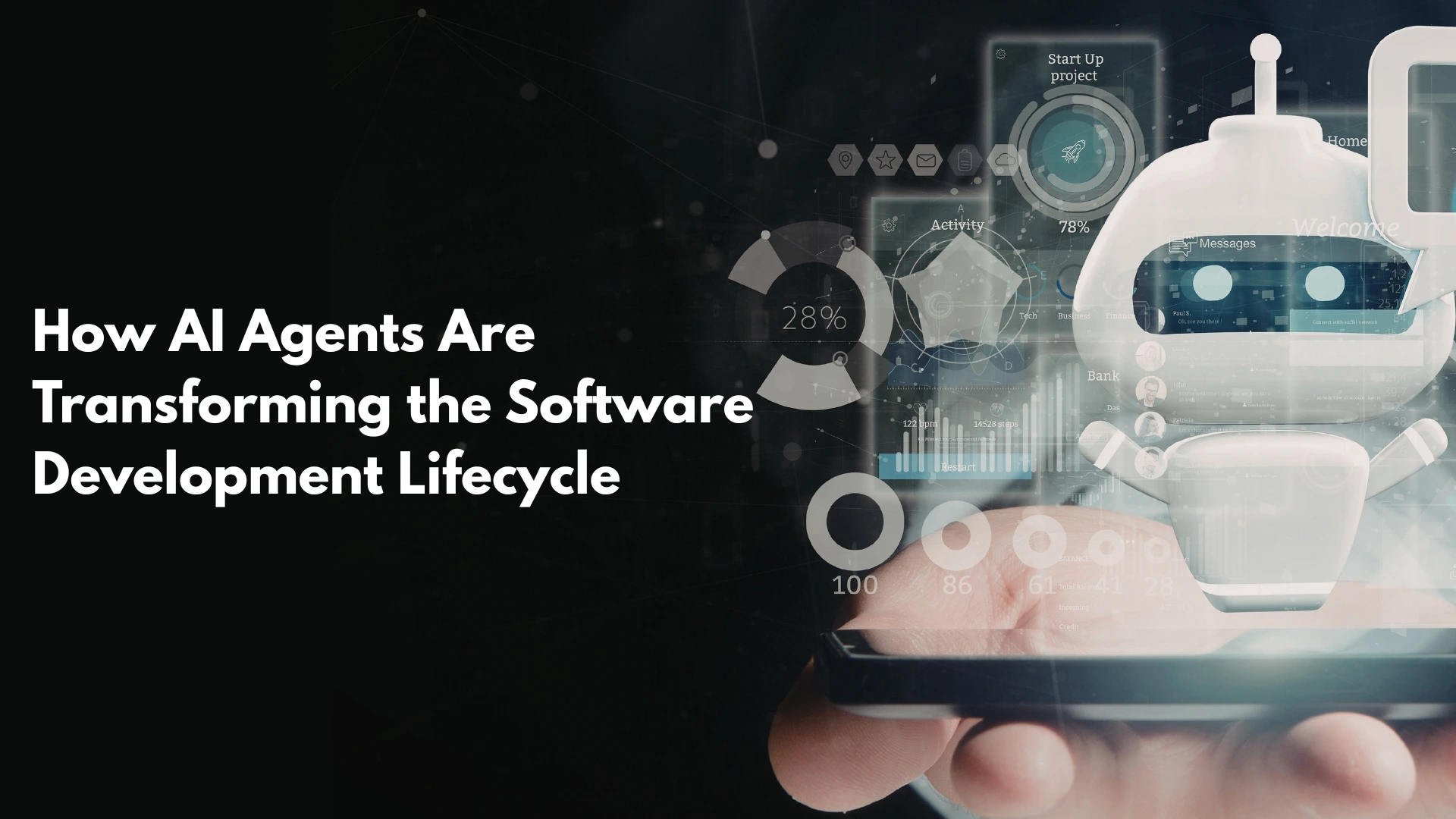
AI agents in the software development lifecycle are intelligent software systems that assist or automate tasks across planning, design, engineering, testing, security, compliance, and release management.
Rather than operating as isolated tools, AI agents act as intelligent participants in the lifecycle, continuously analyzing data, enforcing standards, and maintaining alignment between teams.
AI agents are capable of supporting development teams by:
- reviewing requirements and refining them for clarity
- automating testing processes
- locating system security gaps
- ensuring regulatory rules are followed
- overseeing CI/CD workflows and deployment activities
By embedding intelligence directly into the lifecycle, organizations can reduce manual coordination, detect issues earlier, and maintain consistent governance across software delivery.
The Challenge with Traditional Software Development Lifecycles
Despite improvements in development practices, many organizations still struggle with fragmented workflows.
Fragmented Tools and Development Workflows
In many environments, software development is supported by a collection of separate tools. Requirements, design artifacts, code repositories, testing platforms, and deployment pipelines often operate independently.
Such fragmentation often leads to several challenges:
- lost context between lifecycle stages
- dependence on manual collaboration across teams
- limited traceability from business goals to delivered features
When teams lack shared context, it becomes harder to maintain alignment throughout development.
Misalignment Between Business and Engineering
Software projects begin with business intent—what the organization wants to achieve. As work progresses through product planning, design, engineering, and testing, that intent can gradually drift.
Without continuous alignment, teams may deliver features that technically function but do not fully meet the original business objectives.
Issues Identified Too Late in the Development Process
Traditional development workflows often identify problems late in the lifecycle. Security checks, compliance reviews, and quality validation may occur only after development is nearly complete.
When issues are discovered late, organizations face:
- higher overall development expenses
- the need for repeated corrections and fixes
- postponed product releases
Detecting problems earlier in the lifecycle significantly improves delivery outcomes.
Reduced Visibility Across the Development Lifecycle
Leadership teams frequently lack a clear view of what is happening across the lifecycle.
Common questions become difficult to answer:
- Are requirements correctly implemented?
- Are security standards being properly implemented?
- Is the application prepared for deployment?
- What risks remain in the delivery pipeline?
Without a unified lifecycle perspective, decision-making becomes slower and less reliable.
The Rise of AI Agents Across the Software Lifecycle
AI agents introduce a new model for software delivery. Instead of relying solely on disconnected tools and manual coordination, intelligent agents operate throughout the lifecycle to maintain alignment, enforce governance, and automate complex tasks.
Within CHILL OS, specialized agents assist teams at every stage of software development.
Business Requirements Agents
Business Analyst Agent
The Business Analyst (BA) Agent helps ensure that business intent remains accurately translated into product capabilities.
It supports teams by:
- connecting requirements to business objectives
- identifying gaps or ambiguities in specifications
- maintaining traceability between requirements and development tasks
This helps organizations reduce the risk of building features that do not deliver the expected business value.
Design Support Agents
UI/UX Design Agent
The Design Agent assists product and design teams by enforcing consistent design standards and generating reusable assets.
Its responsibilities include:
- producing wireframes and prototypes aligned with requirements
- managing shared UI components and style standards
- ensuring accessibility and design guidelines are followed
This allows teams to maintain design quality while accelerating product development.
Data Consistency Agents
Data Agent (Unified Data Model)
Data fragmentation is a common challenge in modern applications. Systems often evolve independently, resulting in inconsistent data structures and integration complexity.
The Data Agent helps maintain a Unified Data Model (UDM) across applications and services. By preserving shared data structures, it enables:
- consistent data usage across systems
- more seamless application connections
- enhanced data analysis and reporting
A unified data foundation improves both development efficiency and organizational insight.
Quality and Engineering Agents
QA Agent
Quality assurance traditionally occurs late in development. QA agents shift testing earlier and integrate it continuously throughout the lifecycle.
These agents assist teams by:
- overseeing testing approaches
- generating and maintaining automated test suites
- tracking defects and quality metrics
Continuous quality validation helps ensure that issues are identified early and resolved quickly.
Security Agent
Security is increasingly critical in modern software environments. Instead of being addressed only before release, security must be embedded throughout development.
Security agents help enforce secure development practices by:
- spotting weaknesses while code is being built
- enforcing security rules across projects
- monitoring code and infrastructure risks
This approach reduces the likelihood of security issues reaching production environments.
Compliance Agent
Organizations operating in regulated industries must maintain strict compliance standards. Manual compliance tracking can be difficult and time-consuming.
Compliance agents help maintain governance by:
- validating development practices against regulatory requirements
- keeping records and audit histories
- detecting compliance risks early in the lifecycle
This enables organizations to achieve continuous compliance rather than last-minute audit preparation.
DevOps and Delivery Agents
DevOps Agent
The DevOps Agent helps automate operational activities across infrastructure and deployment environments.
It assists teams with:
- setting up infrastructure resources
- monitoring systems and performance
- handling deployment environments
Automation across operational workflows allows development teams to focus on building features while maintaining system reliability.
CI/CD Agent
Continuous integration and continuous delivery pipelines are essential for modern development. However, pipeline failures and configuration issues can disrupt delivery.
CI/CD agents help maintain stable pipelines by:
- recognizing build breakdowns
- analyzing pipeline problems
- refining deployment processes
This ensures that development teams can deliver updates consistently and efficiently.
Release Manager Agent
The Release Manager Agent coordinates the final stage of the software lifecycle.
It assists releases by:
- planning release timelines
- managing rollbacks and hotfixes
- organizing production rollouts
By automating release management activities, organizations can ship updates more reliably.
Workforce and Governance Agents
Skills and Capacity Agent
Software delivery depends not only on tools and processes but also on the capabilities of the team.
The Skills and Capacity Agent helps organizations understand and optimize their workforce by:
- highlighting missing capabilities
- spotting learning needs
- recommending staffing strategies for projects
This helps ensure that the right expertise is available when needed.
Leave Approval Agent
Operational decisions can also benefit from intelligent automation.
The Leave Approval Agent evaluates leave requests while considering project timelines and resource availability, helping teams maintain appropriate staffing during critical development phases.
How AI Agents Improve Software Delivery
Embedding AI agents across the lifecycle creates measurable improvements in how organizations design and deliver software.
Organizations adopting AI-assisted lifecycle management often experience:
Lower development costs
Early issue detection reduces rework and inefficiencies.
Quicker product delivery
Automation across design, testing, and release processes accelerates development cycles.
Higher code quality
Continuous validation and automated testing improve reliability.
Lower production issues
Issues are identified earlier before they impact users.
Stronger security and governance
Security and compliance policies are applied consistently throughout development.
Better lifecycle visibility
Teams and leadership gain a clearer view of progress, risks, and delivery status.
These improvements allow organizations to deliver digital products with greater confidence and efficiency.
CHILL OS: Bringing Intelligence to the Entire Lifecycle
CHILL OS (ChampSoft Intelligent Lifecycle Operating System) brings these capabilities together into a unified lifecycle environment.
Instead of treating software development as a series of disconnected phases, CHILL OS connects every stage of the lifecycle with shared context and embedded intelligence.
By integrating AI agents across planning, design, engineering, testing, security, compliance, and release management, CHILL OS enables organizations to achieve:
- a single source of truth across the software lifecycle
- ongoing coordination between business and engineering teams
- automated governance and compliance monitoring
- stronger software quality and stability
- faster and more predictable software delivery
As software systems become increasingly complex, intelligent lifecycle platforms like CHILL OS represent the next evolution in how organizations design, build, and operate digital products.
FAQs
What does an AI agent do in software development?
An AI agent in software development is an intelligent system that assists or automates tasks across the software lifecycle, including requirements analysis, testing, security validation, and release management.
How do AI agents improve software quality?
AI agents continuously monitor development activities, automate testing, enforce standards, and detect issues earlier in the lifecycle, helping teams deliver higher-quality software.
Do AI agents replace software developers?
AI agents are designed to support development teams rather than replace them. By automating repetitive tasks and maintaining lifecycle alignment, they allow developers to focus on solving complex problems and delivering innovation.
How do AI agents support DevOps processes?
In DevOps environments, AI agents help automate infrastructure management, monitor systems, identify pipeline failures, and improve deployment reliability.
How does CHILL OS use AI agents?
CHILL OS embeds specialized AI agents across the entire software lifecycle to align teams, automate workflows, maintain governance, and improve software delivery outcomes.