
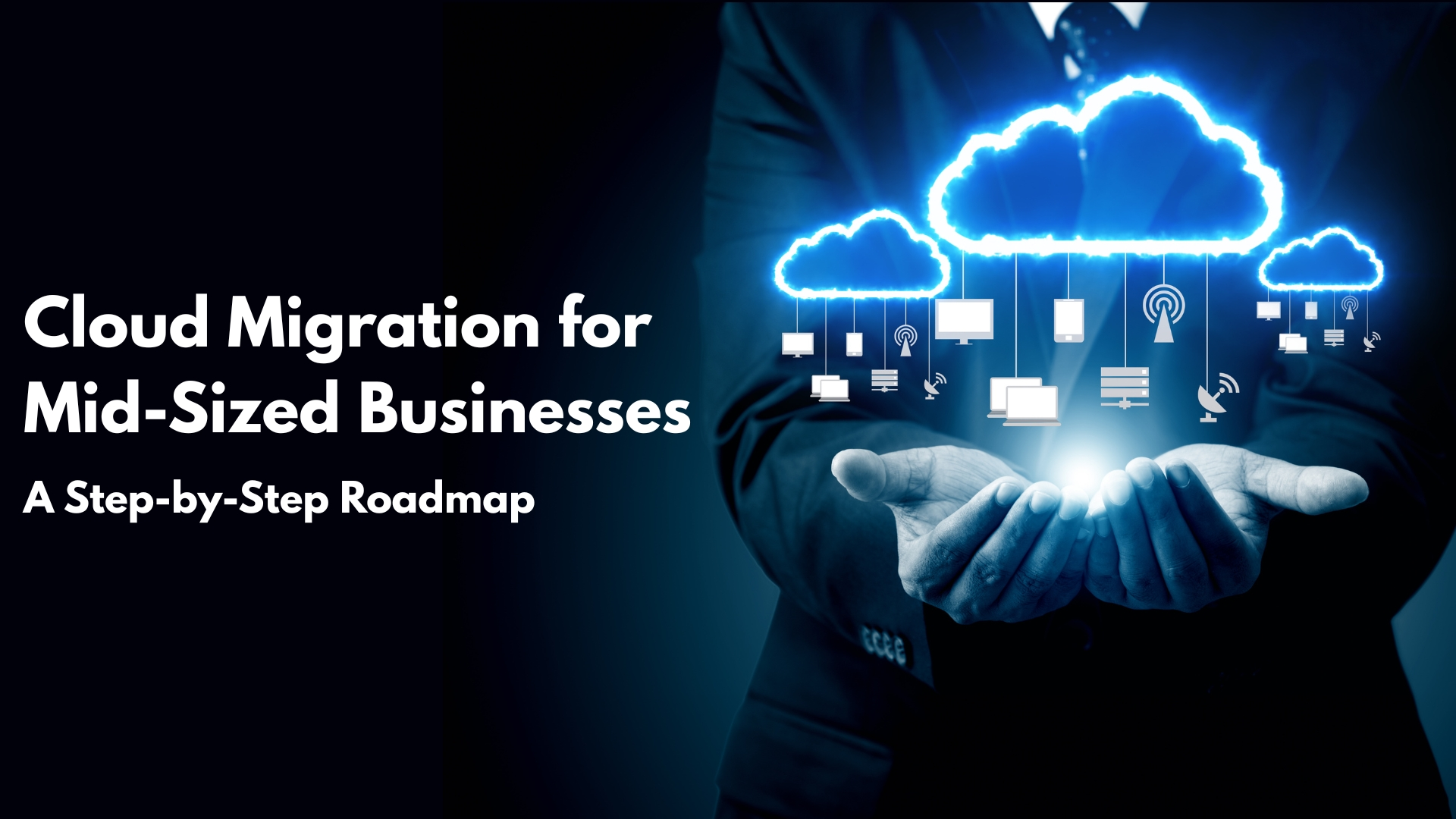





Cloud migration is a transformative journey for mid-sized businesses. It involves moving data, applications, and IT processes to the cloud. This shift offers numerous benefits, including cost savings and scalability key cloud computing benefits for growing teams.
However, the migration process can be complex. A clear roadmap is essential for success. This guide Cloud Migration for Mid-Sized Businesses: A Step-by-Step Roadmap provides a step-by-step approach to cloud migration for mid-sized businesses.
Understanding the current IT environment is the first step. It helps in identifying the right cloud migration strategy and cloud data migration strategy. Setting clear business objectives is crucial for aligning the migration process with company goals.
Choosing the right cloud model and service provider is another key decision. Security, compliance, and data privacy must be addressed throughout the process. A phased approach to migration minimizes risks and downtime.
Post-migration, continuous optimization and performance monitoring ensure long-term success. Engaging stakeholders and training employees are vital for a smooth transition. Embrace the future with confidence through effective cloud migration planning.
Understanding Cloud Migration for Mid-Sized Businesses
Cloud migration is not just a trend; it’s a strategic move. For mid-sized businesses, it promises enhanced agility and competitiveness. Yet, understanding the nuances is crucial for a smooth transition.
The process of cloud migration includes several components. It involves the movement of data, applications, and other IT processes. Each component requires careful planning to minimize disruptions.
Key considerations for mid-sized businesses include:
- Assessing current and future IT needs
- Identifying the right cloud migration solution
- Balancing costs with potential benefits
Mid-sized enterprises often operate with limited resources. Hence, managing the migration efficiently is vital. It requires a thorough evaluation of both current infrastructure and future requirements.
Evaluate cloud migration strategies that match business priorities and constraints. Selecting the right approach early reduces rework and accelerates outcomes.
Cloud migration offers an opportunity to leverage new technologies. It supports digital transformation by improving operational efficiency and customer engagement. However, ensuring a detailed understanding is vital for long-term success.
Key Benefits of Cloud Computing for Mid-Sized Businesses
Cloud computing offers substantial advantages that directly address the constraints and growth ambitions of mid-sized organisations. In short, cloud computing benefits include predictable costs, rapid scaling, and access to modern capabilities:
- Cost efficiency — reduce hardware, licensing, and maintenance expenditure
- Flexibility and scalability — adjust resources instantly to match demand
- Enhanced collaboration — teams access data and applications from anywhere, supporting remote work
- Improved disaster recovery — built-in redundancy and faster recovery times
- Access to advanced technologies — AI, analytics, and automation on demand
- Enhanced data analytics capabilities — actionable insight from centralised data
- Competitive edge — faster service delivery improves customer satisfaction
Most mid-sized businesses achieve positive ROI within 12–24 months through reduced infrastructure spend and improved operational efficiency. Understanding these benefits helps build a strong business case and secure stakeholder buy-in before migration begins.
Common Cloud Migration Challenges and How to Overcome Them
Data integrity, security concerns, and compatibility with existing systems are the most frequently cited obstacles. Each can stall or complicate the process if not addressed proactively.
- Conduct thorough assessments before starting to surface hidden dependencies
- Develop a comprehensive, phased migration plan with explicit rollback options
- Engage stakeholders early to align goals and expectations
- Use cloud migration tools to automate and streamline the process
- Collaborate closely with IT teams throughout every phase
Addressing potential issues before migration begins rather than during it is the single most effective way to reduce risk.
Step 1: How to Assess Your Current IT Environment Before Cloud Migration
The first step in any cloud migration journey is a thorough assessment of your existing IT infrastructure hardware, software, and network configurations. This assessment reveals outdated systems, compatibility gaps, and cost baselines that will inform every subsequent decision.
Key components to evaluate:
- Inventory of all existing applications and services
- Current network architecture and bandwidth capacity
- Security protocols and compliance levels
- Total cost of current IT setup (for cloud cost comparison)
Engage your IT team or an external consultant if needed. Their expertise can surface hidden challenges that are easy to miss in a self-directed review. A detailed assessment is the foundation of an effective cloud migration strategy and an actionable cloud data migration strategy.
Step 2: How to Define Clear Business Objectives and Migration Goals
After assessing your IT environment, define measurable business objectives aligned with your overall strategy. Clarity about why you are migrating guides every subsequent decision and makes it possible to measure success after go-live.
Goals to consider:
- Improve operational efficiency
- Increase flexibility and scalability
- Reduce IT costs
- Enhance data security and compliance
Define both short-term and long-term goals. Short-term goals might include reducing infrastructure maintenance burden within six months; long-term goals might target a 30% reduction in IT operating costs over three years.
Step 3: How to Choose Between Public, Private, and Hybrid Cloud
Selecting the right cloud model is critical. Match the model to your workload patterns, regulatory obligations, and need for control — then vet providers for reliability, security, support, and total cost of ownership. As part of this evaluation, decide which workloads to migrate to cloud first to reduce risk and build confidence.
| Cloud Model | Best for | Key advantage | Typical use case |
| Public cloud | Variable workloads | Cost efficiency & scalability | SaaS apps, development environments |
| Private cloud | Strict regulatory needs | Maximum control | Financial data, healthcare records |
| Hybrid cloud | Mixed workloads | Flexibility + control | Sensitive core systems + scalable services |
When evaluating providers, assess reliability and performance, security measures and regulatory compliance, support quality and responsiveness, and total cost of ownership including setup fees, ongoing costs, and projected savings. Request case studies from similar businesses and consider a paid pilot before full commitment.
Step 4: What Should a Cloud Migration Roadmap Include?
An effective cloud migration roadmap includes: an inventory of all applications and data, dependency mapping, phased migration waves ordered by business priority and risk, milestones and success criteria, risk mitigation steps, stakeholder communication plans, and testing and validation procedures. Revisit and adjust the roadmap regularly as new information surfaces.
Key elements to include:
- Inventory of existing data and applications
- Risk assessment and mitigation plans
- Communication plan for stakeholders
- Testing procedures for migrated data
Create a detailed timeline with milestones and assigned responsibilities. The roadmap acts as both a planning document and an accountability tool.
Step 5: Non-Negotiable Security, Compliance, and Data Privacy Controls
Align to your regulatory requirements (GDPR, HIPAA, or others), encrypt data at rest and in transit, enforce multi-factor authentication, apply least-privilege access policies, and conduct regular security audits. These controls must be in place before migration begins — not added afterwards.
Security measures to implement:
- Regular security audits before, during, and after migration
- Multi-factor authentication (MFA) enforced across all accounts
- Data encryption at rest and in transit
- Access control policies based on least privilege
Map your compliance obligations based on your industry and operating geography. Then select a cloud provider that meets those standards and has the certifications to prove it.
Step 6: How to Execute Cloud Migration Using a Phased Approach
Start with lower-risk applications to uncover issues early. Schedule cutovers during off-peak hours, maintain backup systems, and prepare tested rollback plans with clear ownership. Progress to critical systems only once early phases have been validated.
A phased migration lowers downtime and risk by:
- Making troubleshooting easier with smaller migration batches
- Reducing impact on daily business operations
- Reducing change resistance by enabling people to adjust gradually
Ensure all team members understand their roles, document every step thoroughly, and maintain close coordination between IT and business units throughout.
Step 7: Testing, Validation, and Minimising Downtime During Cloud Migration
Once the migration plan is in place, testing becomes critical. Verify data integrity and application functionality before full-scale deployment. Validation confirms that everything works as intended and prevents issues from surfacing in production.
Key techniques:
- Schedule migrations during off-peak hours
- Maintain and test backup and restore procedures
- Before each cutover, put rollback strategies into action and practise them
Step 8: Training, Change Management, and Stakeholder Engagement
Successful cloud migration requires well-informed teams. Ensure employees receive comprehensive training on new cloud systems covering both technical and functional aspects. Change management including addressing resistance and fostering a positive attitude toward the new environment is a critical success factor that is frequently underestimated.
Key activities:
- Conduct training sessions before and after go-live
- Establish clear communication strategies for all stakeholder groups
- Maintain easily accessible support channels and provide frequent updates.
Early stakeholder engagement guarantees congruence with corporate objectives. Emphasising collaboration and open communication reduces post-migration resistance.
Step 9: Post-Migration Optimization and Performance Monitoring
Track KPIs from day one. Conduct regular performance reviews, right-size resources to match actual demand, and apply updates continuously. Ongoing optimisation not just the migration itself is what converts cloud investment into measurable ROI.
Key tasks:
- Conduct regular performance reviews against defined KPIs
- Fine-tune resource allocation to eliminate over-provisioning
- Implement updates and improvements based on monitoring data
Cloud Migration Best Practices for Mid-Sized Businesses
Adopting proven best practices significantly increases the likelihood of a successful migration. These practices streamline the process and mitigate potential risks.
- Prioritise data security and compliance from day one not as a post-migration task
- Set realistic timelines and milestones with explicit success criteria
- Engage a qualified cloud migration partner with mid-sized business experience
- Keep open dialogue between IT and business units throughout
- Document every step for transparency, accountability, and future troubleshooting
How to Select the Best Cloud Migration Services for Mid-Sized Businesses
Selecting the appropriate cloud migration services provider is essential. The decision directly affects the success of the migration process. Compare potential vendors to these crucial criteria:
- Proven experience working with mid-sized businesses specifically
- Full range of services from assessment through post-migration optimisation
- Dedicated support, responsive account management, and clear SLAs
- Security expertise and relevant industry certifications
When comparing providers, prioritise the best cloud migration services for mid sized businesses that align with your budget, risk tolerance, and timeline. Request case studies from businesses similar to yours in size and sector. Assess total cost of ownership — not just the headline migration fee including setup, ongoing management, and projected savings. The appropriate partner speeds up results and lowers risk. Champsoft’s cloud development team covers the full spectrum of migration requirements, from strategy and assessment through to post-migration optimisation and support.
Conclusion: Embracing the Future with Cloud Migration
Cloud migration is a transformative journey for mid-sized businesses. By adopting cloud solutions, they can gain agility, enhance data security, and boost operational efficiency.
Investing in a well-planned migration strategy brings lasting benefits. As businesses embrace cloud technology, they position themselves for sustained growth and innovation, and can migrate to cloud services at a pace that matches their risk profile and resources.
FAQs
How long does cloud migration take for a mid-sized business?
For most mid-sized businesses, a phased cloud migration takes 3-9 months. Simple lift-and-shift projects can complete in 6-8 weeks, while full re-architecture of legacy systems may take 12 months or more. The timeline depends on data volume, application complexity, and the pace of your phased rollout. Champsoft begins every engagement with a 2-week infrastructure assessment to produce an accurate, risk-adjusted timeline.
How can I decide between a hybrid, private, and public cloud?
Adapt the model to your workload trends, legal requirements, and control requirements. Public cloud suits variable workloads and prioritises cost efficiency. Private cloud offers tighter control and is preferred for strict regulatory environments such as finance or healthcare. Hybrid cloud blends both for flexibility and control. A hybrid-first strategy allows you to gradually shift workloads as confidence increases when in question.
What security controls are non-negotiable during cloud migration?
Map your regulatory obligations (GDPR, HIPAA, or others) first, then select a provider that meets those standards. Implement multi-factor authentication, least-privilege access policies, and data encryption at rest and in transit. Conduct regular security audits before, during, and after migration, and collaborate with experienced security professionals to maintain a strong posture throughout.
How can we minimise downtime during cloud migration?
Use a phased approach with pilot migrations on lower-risk applications first. Schedule cutovers during off-peak hours, maintain backup systems throughout, and prepare tested rollback plans with clear ownership. Thorough testing and validation before each cutover, combined with close coordination between IT and business teams, is the most effective way to prevent disruption.
Is cloud migration expensive for a mid-sized business?
Initial migration costs vary based on infrastructure complexity, cloud model, and provider pricing. However, cloud adoption consistently reduces long-term hardware, maintenance, and operational costs. Most mid-sized businesses achieve positive ROI within 12-24 months. A thorough upfront assessment is the best way to get an accurate cost picture before committing.
What should we focus on post-migration to ensure ROI?
Monitor key performance indicators continuously and conduct regular performance reviews. Right-size resources to match actual demand over-provisioned cloud infrastructure is one of the most common sources of avoidable cost. Apply updates and improvements based on monitoring data. Ongoing optimisation is what converts cloud investment into sustained, measurable ROI.
Can cloud migration improve data security?
Yes, when implemented correctly. Leading cloud providers invest substantially in security infrastructure and certifications that most mid-sized businesses cannot replicate on-premises. Encryption, automated threat detection, role-based access controls, and compliance frameworks are all available as native cloud features. The key is selecting a provider that meets your specific regulatory requirements and implementing the available controls properly.