
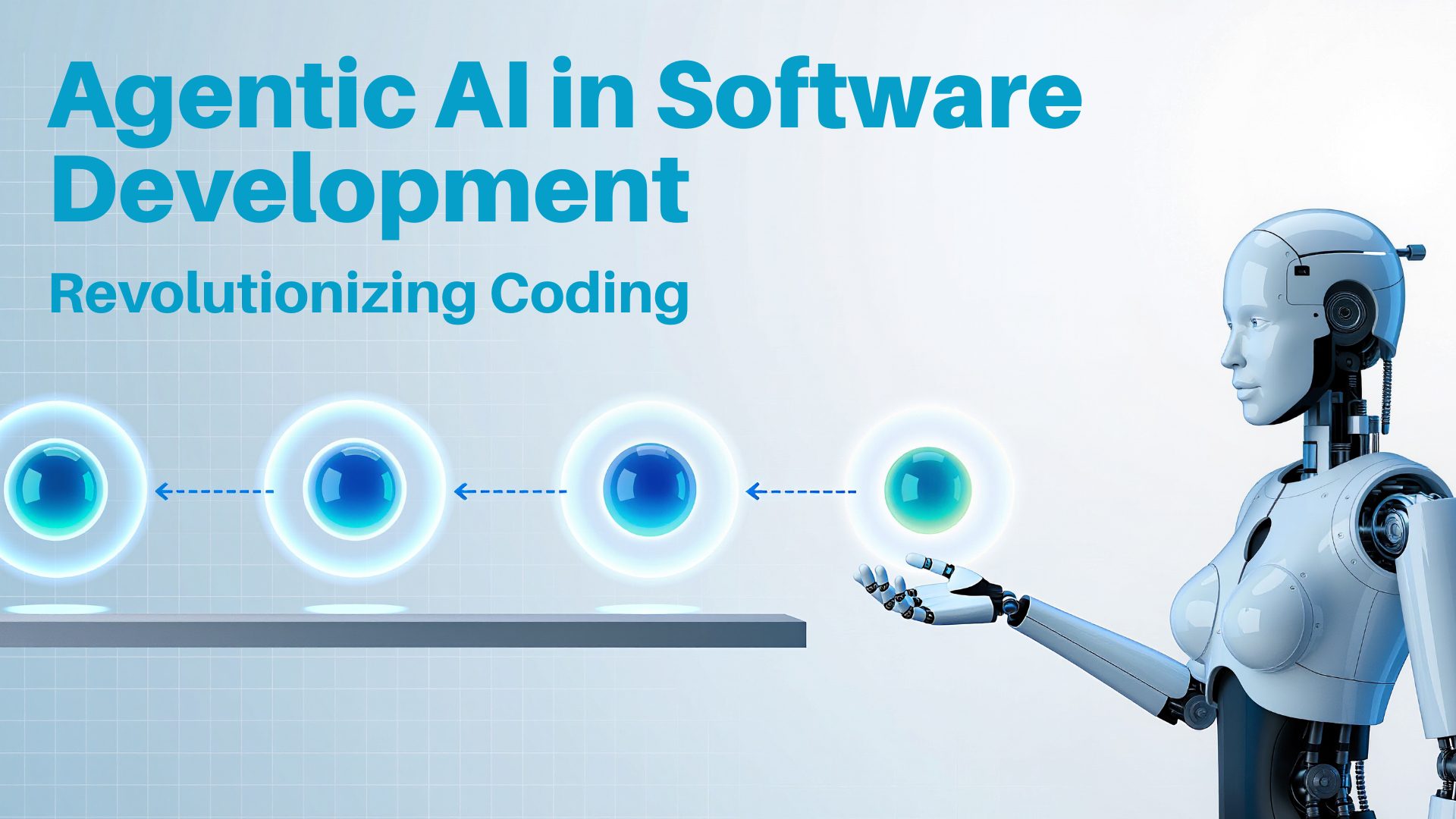





Agentic AI in software development is reshaping modern engineering workflows. It introduces a new era where intelligent coding, software automation, machine learning coding and autonomous programming work together to build faster, cleaner and more adaptive software. With its ability to make autonomous decisions, agentic AI reduces repetitive work, enhances code quality and accelerates innovation, allowing developers to focus on strategic and complex problem-solving.
What Is Agentic AI in Software Development?
Agentic AI stands out because it can make autonomous decisions and act without constant human supervision. In software development, this capability transforms how applications are created, maintained and optimized.
Agentic AI automates repetitive coding tasks and handles technical functions like debugging, code optimization and error identification. By learning from patterns in large datasets, it continually improves its decision-making, making intelligent coding more scalable and consistent.
Key Features of Agentic AI in Development
- Autonomous decision-making: Functions without direct human intervention.
- Repetitive task automation: Reduces manual workload and increases productivity.
- Efficient debugging: Quickly identifies and resolves code issues.
As software demands continue to grow, agentic AI provides scalable and adaptive solutions. Its ability to learn and evolve makes it an indispensable asset in AI software development.
How Agentic AI Powers Intelligent Coding (With Real Improvements)
Intelligent coding is one of the biggest advantages of agentic AI in tech. By analyzing massive code bases, AI learns what high-quality code looks like and applies that knowledge to new projects.
Over time, agentic AI reduces bugs, refines coding patterns and enhances overall code stability. Its suggestions are based on real-world coding trends, making outputs more reliable and aligned with best practices.
How Intelligent Coding Works
- Analyzing existing code to identify recurring errors.
- Suggesting improvements for cleaner, more efficient code.
- Learning from trends in programming languages and frameworks.
As these systems adapt, developers gain tools that continuously improve, supporting faster and smarter production cycles.
How Agentic AI Enables Software Automation in Development
In today’s fast-paced environment, software automation is critical. Agentic AI streamlines each stage of development including coding, testing and deployment by automating repetitive and time-draining tasks.
Core Automation Capabilities
- Automating routine coding so developers can focus on complex tasks.
- Consistent testing supported by AI-driven analysis and bug detection.
- Efficient deployment with fewer errors and shorter release cycles.
This automation reduces time-to-market, improves software reliability and helps businesses gain a competitive advantage.
Machine Learning Coding and Autonomous Programming: How They Work Together
Machine learning coding brings predictive intelligence to development. It analyzes large datasets to anticipate developer needs, suggesting the next piece of code or optimal logic flow.
Autonomous programming builds on this by enabling AI systems to independently write, optimize and debug code. This reduces reliance on human intervention for routine tasks and improves overall efficiency.
Key Components of Machine Learning Coding and Autonomous Programming
- Predictive coding to anticipate requirements.
- Code optimization to improve performance.
- Self-debugging that identifies and fixes errors automatically.
Together, these capabilities push software engineering toward more automated, accurate and scalable processes.
Real-World Applications and Use Cases of Agentic AI
Agentic AI already plays a crucial role across industries. Its ability to automate testing, analyze data and personalize user experiences makes it a versatile tool in AI software development.
Common Use Cases
- Automated testing for faster releases.
- Predictive analytics for business insights.
- Personalized recommendations in e-commerce platforms.
Industries Benefiting From Agentic AI
- Finance: Fraud detection, compliance automation, risk prediction.
- Healthcare: Drug discovery, diagnostic insights, patient record analysis.
- Automotive: Smart vehicle systems and autonomous driving intelligence.
Its expanding role highlights how essential agentic AI is becoming across global technology ecosystems.
Benefits and Challenges of Agentic AI in Tech
Agentic AI provides clear benefits but also introduces challenges that require thoughtful management.
Key Benefits
- Improved productivity by automating repetitive tasks.
- Enhanced code quality with intelligent suggestions.
- Faster development cycles supporting rapid innovation.
Key Challenges
- Ethical concerns, especially around job displacement.
- Transparency issues related to AI decision-making.
- Trust and accountability when AI performs technical tasks.
Balancing these benefits and challenges will be essential as organizations integrate more AI-driven processes.
The Future of AI Software Development: What to Expect
The future of AI in tech will rely heavily on agentic AI systems becoming more advanced, adaptive and autonomous. Developers will increasingly shift to strategic and creative roles while AI manages routine tasks.
As more companies embrace AI software development, innovation will accelerate and new opportunities will emerge for building smarter, more reliable solutions.
To explore real-world AI services and implementation strategies, visit our internal resource:
Champsoft AI Services
Conclusion
Agentic AI is transforming software development by streamlining processes, improving code quality and enabling intelligent coding at scale. Its autonomous capabilities free developers to focus on creativity, problem-solving and strategic engineering tasks.
As this technology continues to evolve, its impact on software automation and machine learning coding will only grow. Embracing agentic AI now will help businesses stay ahead in an increasingly competitive technological landscape.
FAQ’s
How does agentic AI improve coding accuracy?
It learns from large datasets, identifies common errors and suggests improvements, resulting in cleaner and more accurate code.
Is agentic AI replacing developers?
No. It automates repetitive tasks but supports developers by enhancing productivity and providing intelligent coding recommendations.
What role does autonomous programming play in AI development?
Autonomous programming enables AI to write, optimize and debug code independently, reducing manual effort.
How does software automation benefit businesses?
It speeds up development cycles, reduces human error, lowers costs and supports faster software delivery.